
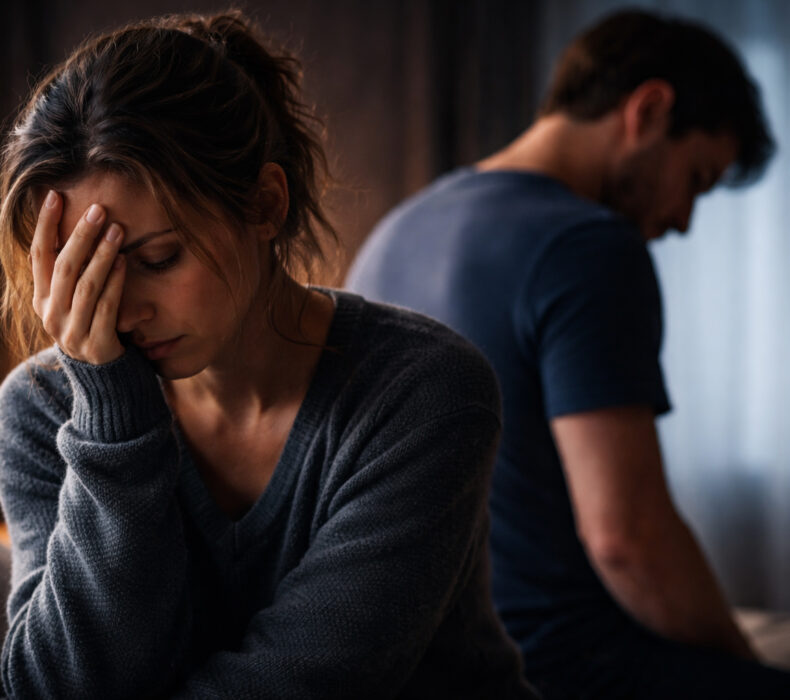
Let’s get something straight before we start.
This isn’t just about your partner.
It’s about your kid who got yelled at for spilling juice on a Tuesday morning.
Your mom who called at the wrong time and got the sharp version of you.
Your best friend who said the wrong thing and got the silent treatment for three days.
This is about all of them.
Because here’s the pattern nobody likes to admit: the people who get the worst of you are the people who mean the most to you.
And if that doesn’t bother you at least a little – you’re probably not reading this anyway.
Quick Reality Check
Before we go any further – see if this sounds familiar:
- You snap at someone you love
- You regret it immediately
- You promise yourself it won’t happen again
- It happens again
If you just nodded, you’re not alone. And you’re not broken.
But you do need to understand why it keeps happening. And here’s the first thing to know: most of it happens automatically, not intentionally.
Why Do We Hurt the People We Love?
In 2014, psychologist Deborah South Richardson reviewed three decades of research on aggression in relationships.
She coined the term “everyday aggression” to explain why we consistently hurt the people closest to us. Her conclusion was unequivocal: “The people who are likely to cause us harm are likely going to be people we know. It’s not the strangers we need to fear.”
Read that again.
Not strangers. Not enemies.
The people you love.
Reason #1: They’re Safe – And You’re Exploiting That
You’re polite to the barista who gets your order wrong.
You stay calm with your boss when he makes a bad call.
You smile at neighbors you can’t stand.
But your partner? Your kid? Your best friend?
That’s where you unload.
Bad day at work – they catch it.
Traffic was a nightmare – somehow that’s their problem.
Something’s been eating at you for weeks – you don’t explain, you explode.
Not because they deserve it.
Because they’re there. And because you know they’re not going anywhere.
Psychologist Alexandra Solomon calls this “rather normal” – the people closest to us absorb frustrations they had nothing to do with, simply because the relationship feels secure enough to handle it.
The word to focus on is feels.
Because “secure enough” has a limit.
You don’t lose people in one big moment. You lose them in a thousand small ones like this.
Reason #2: Love Makes You Vulnerable – And Vulnerability Makes You Dangerous
Here’s something they don’t put on Valentine’s Day cards:
The more someone means to you, the more power they have to destroy you.
And your brain – wired for survival, not romance – does not handle that well.
Neuroscience has shown that the brain regions involved in processing physical pain overlap significantly with those involved in social and emotional pain.
The threat of losing someone you love registers almost like a physical wound.
So what does a wounded animal do?
It attacks first.
You go cold when things get too close.
You pick a fight before the other person can see how much you actually need them.
You say something cruel because saying “I’m scared of how much I love you” feels impossible.
That’s the part nobody warns you about.
And that’s where things break.
Reason #3: You’re Not Reacting to Now – You’re Reacting to Then
Your partner uses a certain tone.
Your teenager rolls their eyes the wrong way.
Your friend says something that lands weird.
And suddenly you’re at a ten when the situation called for a two.
That’s not a logic problem. That’s history.
Psychology has a name for this: “hurt people hurt people.” Individuals who’ve experienced pain or unresolved trauma are more likely to project those feelings onto the people closest to them.
Your nervous system doesn’t check the calendar before it fires.
The argument isn’t really about the dishes.
The blow-up with your kid isn’t really about the homework.
It’s about something older. Something that hasn’t been dealt with.
Until it is – it keeps showing up. Wearing the faces of the people you love most.
Reason #4: Your Expectations Are Quietly Destroying Them
From coworkers, you expect professionalism.
From strangers, basic decency.
From the people you love?
You expect everything.
Know what you need without asking. Show up perfectly on their worst days. Never say the wrong thing at the wrong moment.
And when they inevitably, humanly fail that impossible standard?
It hits harder than it should.
Not because what they did was terrible.
Because what you expected was unrealistic.
The higher the love, the higher the expectations. The higher the expectations, the more guaranteed the disappointment. The more guaranteed the disappointment, the more damage gets done.
Break the math.
Reason #5: Why You Hurt People You Love – Even When You Know Better
This is the one people skip.
Don’t.
Some people hurt the ones they love not out of cruelty, but as unconscious self-sabotage – a slow push to create distance before the relationship becomes stable enough to actually lose.
If you grew up in chaos, stability feels suspicious.
If you’ve been abandoned before, closeness feels dangerous.
If you’ve been told you don’t deserve good things – you will find creative ways to destroy them when they show up.
You’ll pick fights when things are going well.
You’ll go cold when someone gets too close.
You’ll test the relationship until it breaks – and then act surprised.
It’s not malicious. It’s protective.
But the damage is the same.
Reason #6: They Know Exactly Where to Hit
The people closest to you know your weak spots.
Not because they studied you.
Because you showed them. Over time. Through trust. Through vulnerability.
And when you’re angry, you don’t aim to win.
You aim to hurt.
That’s when things get said that can’t be unsaid.
When the argument technically ends but something doesn’t recover.
When someone needs space not because of the fight – but because of that one line.
You know the one.
How to Stop Hurting the People You Love
Not with a 30-day challenge. Not with a gratitude journal.
With something harder: honest, consistent self-awareness.
1. Ask the question before you open your mouth.
“Is this about them – or is it about me?”
Half the time, it’s you. That five-second pause changes everything.
2. Replace the snap with the sentence.
“I had a brutal day and I’m taking it out on you.”
That one sentence does more for a relationship than three hours of arguing. It’s not weakness. It’s the whole game.
3. Stop making them pay for debts they didn’t create.
They’re not your pressure valve. If something is building inside you, that’s yours to manage.
Exercise. Vent elsewhere. Write it down.
But don’t make the people you love absorb a bill they never signed.
4. Lower the expectations. Raise the communication.
The version of your loved ones that lives in your head – the one who always says the right thing, never disappoints – doesn’t exist.
The actual people in front of you are doing their best with what they have.
Same as you.
5. How to Stop Hurting People You Love for Good: Deal With Your Own Stuff
Unresolved pain doesn’t disappear. It moves.
Into your reactions. Into your words. Into the lives of people who didn’t ask for any of it.
Breaking the cycle means recognizing and addressing your own pain – whether through therapy, honest self-reflection, or simply learning healthier ways to express what you’re actually feeling.
Therapy isn’t weakness. It’s maintenance.
Your car gets an oil change. Maybe your emotional wiring deserves the same.
How to Stop Hurting the People You Love – Starting Right Now
You don’t hurt the people you love because you’re a bad person.
You do it because you’re carrying things.
Because love makes you vulnerable in ways nothing else does.
Because somewhere along the way, you learned that closeness leads to pain – so you strike before you can be struck.
The people who break this pattern aren’t the ones who love harder.
They’re the ones who looked at themselves honestly and decided to do something about it.
You can’t unhurt someone.
But you can become the person who stops adding to the damage.
Start there. Before there’s nothing left to fix. If you recognize yourself in this and the pattern keeps repeating – that’s not a coincidence. Some cycles don’t break on their own. Talking to someone who actually knows what they’re doing can make the difference between reading another article and actually changing something.
- Tags:
- love
- psychology
- relationships

Survived 20 years of clients, deadlines, and bad briefs. Started Wizformer to see if working for yourself is actually better. Jury's still out.