
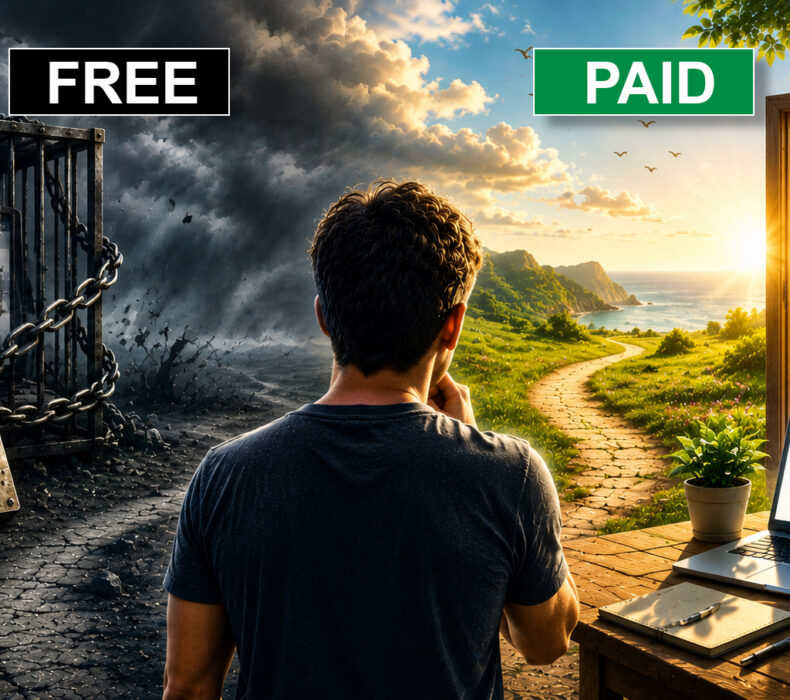
Every week, someone starts a blog on free blog hosting. They pick a template, write their first post, and feel great about not spending a dime.
Six months later, they want to add an affiliate link. Or run ads. Or just own a domain that doesn’t end in “.wordpress.com.”
That’s when free blog hosting stops being smart.
This isn’t an argument against free blog hosting entirely. It’s a breakdown of exactly what free blog hosting costs you when your goal is income, and what paid hosting actually buys you for the price of a couple of coffees a month.
What Free Blog Hosting Actually Means
Free blog hosting comes in a few flavors, and they are not all the same. The gap between them matters more than most people realize.
Platforms like WordPress.com, Blogger, Medium, and Wix all offer free tiers. They handle the servers, the software, the uptime. You write. They host. Zero dollars changes hands.
What changes hands instead: control.
On a free plan, the platform owns the infrastructure. That means they set the rules. And the rules, in almost every case, are specifically designed to limit what you can do with your blog until you pay up.
WordPress.com is the most important example, because it’s where most people land first. The free plan gives you a “yourname.wordpress.com” address, limited storage, and WordPress ads running on your site that pay WordPress, not you. Affiliate links are technically allowed, but only if your site’s primary purpose is original content, not driving traffic to affiliate offers. If WordPress.com determines your blog exists mainly to push affiliate traffic, they can suspend it. You may or may not get a backup of your content. That’s not a hidden clause. That’s the business model.
The SEO Problem Nobody Mentions Until You’re Already Stuck
Here’s what hurts more than the monetization limits: the SEO risk from starting on a free subdomain.
When you blog at “yourname.wordpress.com” or “yourname.blogspot.com,” every link you earn, every piece of authority you build, every ranking signal Google picks up, it’s attached to that subdomain. Not to you. Not to a domain you own.
The day you decide to migrate to your own domain, you don’t necessarily start from zero, but you do create a migration risk you never needed. Google has an entire guide dedicated to minimizing SEO damage during site moves, which tells you everything about how real that risk is. Redirects help. They don’t eliminate the problem.
Free hosted subdomains don’t automatically hurt SEO, but they do create long-term branding and migration disadvantages that compound over time. No independent domain authority from day one. Shared reputation with every other site on that platform. Slower progress because Google has less clarity about who you are and whether to trust you.
For a blog with income as the goal, slower ranking progress is not a minor inconvenience. It’s the difference between month six feeling like traction and month six feeling like nothing is working.
What Free Hosting Actually Costs You
The honest accounting of free blog hosting looks like this:
- Your domain address belongs to a platform, not you
- Your content is on their servers under their terms
- The ads running on your blog generate revenue for them
- Your affiliate marketing options are restricted
- Your SEO authority is attached to a subdomain you don’t own
- If they change their terms, shut down a feature, or close your account, you have limited recourse
In exchange: you paid nothing upfront.
That’s not a bad deal if you’re journaling, experimenting with writing, or genuinely uncertain whether blogging is something you want to pursue. For a hobby blog with no income goals, free hosting is a completely rational choice.
For a blog built around affiliate income, ad revenue, or any form of monetization, free blog hosting is expensive. It just bills you in time and missed opportunity instead of money.
What Paid Hosting Costs in 2026
This is where the “but free blog hosting saves money” argument falls apart pretty quickly.
Hostinger’s Premium plan starts at around $2.99 per month on an annual plan, though promotional pricing varies by country, billing term, and renewal date, so treat all figures here as approximate starting points rather than locked prices. That plan includes a custom domain for the first year, SSL, LiteSpeed servers, and enough resources to handle a blog comfortably through its first year or two of growth.
The renewal price after the promotional period is significantly higher, roughly $11.99 per month depending on your plan and region. This is worth knowing before you sign up, not after. Over a multi-year period, the effective average cost works out to somewhere in the $10-12 per month range when you factor in both the promotional and renewal pricing together.
That’s the price of one meal out per month to own your platform, your domain, your data, and your monetization rights. No restrictions on affiliate links. No platform ads running on your site without your permission. No terms of service that can suspend you for building something that earns.
There are other solid options at similar price points. Bluehost, SiteGround, and IONOS all land in a comparable range for beginner bloggers. The point isn’t that Hostinger is the only answer. The point is that serious paid hosting starts well below $15 per month, and that price buys you everything free blog hosting withholds.
The Platforms Worth Knowing
WordPress.com (free tier)
Fine for personal writing. For monetization, affiliate links are allowed only where original content is clearly the primary purpose, not as a vehicle for sending traffic to offers. The line is enforced, and the consequences of crossing it are real.
Blogger (free)
Google’s platform. Forever free, custom domain connection possible if you buy the domain separately, and Google AdSense integration is simple. The interface looks like 2012 because it largely is. No meaningful plugin ecosystem, limited growth ceiling. Functional if your expectations are modest.
Medium (free)
Built-in audience, clean reading experience, zero technical overhead. Monetization happens through Medium’s own Partner Program, which pays based on reader engagement. You don’t run your own ads or affiliate links. For writers who want to write without building anything, this is a legitimate model. For anyone building an affiliate blog, it’s the wrong tool entirely.
Substack (free)
Excellent for newsletter-first content with paid subscription monetization. No custom domain on the free plan. No SEO tools. No affiliate flexibility. Substack takes 10% of paid subscription revenue when you enable paid tiers, plus payment processing fees on top. It’s a real business model. Just not the affiliate marketing model.
Self-hosted WordPress on paid hosting
What most serious bloggers use. WordPress.org software is free. You bring the hosting. Full plugin access, full monetization control, full SEO flexibility. The combination of WordPress and a host like Hostinger is what “I’m building this to earn money” actually looks like in practice.
If you’re still figuring out whether blogging can actually pay, our breakdown of how long it takes to make money blogging gives you the honest numbers most guides skip.
The Actual Decision
If you’re testing whether blogging is something you want to do at all: start on a free platform. Write for three months. See if you like it. Zero dollars at risk.
If you already know you’re building something with income as the goal: start on paid hosting. The monthly cost is genuinely low, the restrictions you avoid are genuinely significant, and migrating later costs you more in time and SEO recovery than the hosting ever would have.
The place people get stuck is the middle. Starting free with income intentions, building for six months, then hitting the migration problem. This pattern shows up consistently in blogging communities: people build on free platforms with monetization in mind, then discover that migration, redirects, design rebuilds, and lost ranking momentum are the real bill. It’s doable. It’s just a problem you didn’t need to create.
And if you’re wondering whether the passive income dream is even real before you spend a single dollar on hosting, read this first: The Passive Income Lie: What “Make Money While You Sleep” Really Looks Like.
Where to Start With Paid Hosting
If you’re ready to start properly, Hostinger’s Premium plan is a reasonable first choice for most beginner bloggers. It covers what you need: custom domain, WordPress one-click install, solid performance for a new site, and pricing that makes sense for someone building something from scratch.
Prices are promotional for the initial term and vary by country, billing period, and current offers. Always check current pricing directly before committing.
Check current Hostinger pricing here and compare it against the cost of starting over in six months after outgrowing free blog hosting.
Setting up paid hosting takes an afternoon. Rebuilding a blog after outgrowing free hosting can eat half a year.
Frequently Asked Questions
Can I make money blogging with free hosting?
On some platforms, yes, with restrictions. WordPress.com allows affiliate links only where original content is clearly the primary purpose, not affiliate traffic. Blogger allows AdSense. Medium pays through its own Partner Program. None of them give you full control over how you monetize or which programs you can join.
What’s the cheapest way to start a real blog in 2026?
Self-hosted WordPress on a budget host. Hostinger’s promotional pricing starts around $2.99 per month on an annual plan, including a free domain for the first year. Prices vary by region and billing term. Check current offers directly. That’s the minimum viable setup for a blog with income goals.
Is the promotional hosting price permanent?
No, and this is worth understanding clearly before signing up with any host. Promotional prices apply to the first billing term. Renewal prices are higher, often 3 to 4 times the introductory rate. Factor renewal pricing into your planning from the start, not just the year-one number.
Can I switch from free to paid hosting later?
Yes, but it creates avoidable work. Migration takes time, SEO authority doesn’t transfer without careful redirect management, and rankings often dip during the transition. Google provides specific guidance for minimizing that damage, which tells you the risk is real enough to plan around. Starting correctly is easier than fixing it later.
What does paid hosting actually include?
At the Hostinger Premium level: your own domain, SSL certificate, LiteSpeed servers, one-click WordPress installation, email accounts, and enough storage and bandwidth for a new blog with room to grow. No platform ads. No affiliate restrictions. No terms of service clause limiting what you can earn.

Survived 20 years of clients, deadlines, and bad briefs. Started Wizformer to see if working for yourself is actually better. Jury's still out.