
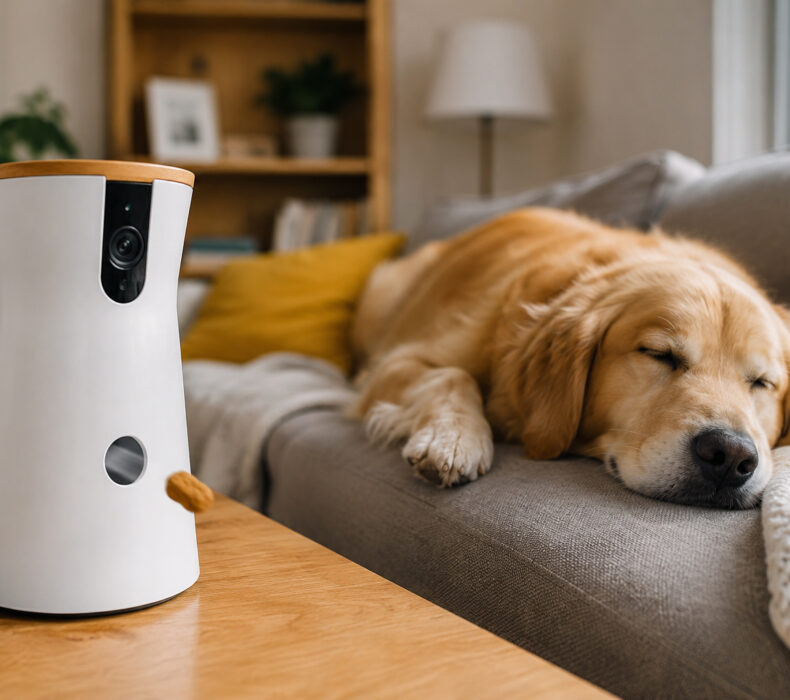
Is a pet camera worth it? Here is the part the ads skip: most healthy adult dogs sleep for around half the day. Sometimes more. So before you spend money on a camera, a treat launcher, and a monthly subscription, it is fair to ask what exactly you will be watching. Spoiler: mostly a dog, sleeping, in HD.
That does not make pet cameras useless. It makes them misunderstood. They solve a real problem. It is just usually not the problem printed on the box, and it is usually not the dog’s problem.
What a Pet Camera Actually Does All Day
Strip away the branding and a pet camera is simply a Wi-Fi camera pointed at your pet. That is the whole product. Everything else is packaging: two-way audio so you can talk to your dog, barking alerts so your phone buzzes when they lose it at the mailman, and in the premium models, a launcher that fires treats across the room like a tiny, expensive catapult.
The marketing says this keeps your dog “safe, healthy, and happy.” The footage says your dog rotated twice on the couch and had a strong opinion about a delivery truck.
Here is what a pet camera legitimately does well:
- Shows you what actually happens after the door closes. Not what you imagine happens. This is the single most valuable thing it does, and we will get to why.
- Catches real trouble early. Chewed cables, a dog stuck somewhere, vomiting, the occasional garbage heist in progress.
- Lets you check in without calling a neighbor. Especially useful on long workdays or when someone else is pet-sitting.
- Records evidence. If your dog destroys one specific pillow every Tuesday, you will finally learn how, when, and with what level of commitment.
What it does not do is change your dog’s behavior. A speaker saying “no” from a plastic tube is not discipline. Most dogs treat it somewhere between confusing and hilarious.
Is a Pet Camera Worth It for Separation Anxiety?
This is where the marketing gets bold and the truth gets interesting.
If your dog panics when you leave, that is separation anxiety, and it is a real behavioral condition. Pet camera brands love this topic. Treat tossing is routinely advertised as a way to “ease” it. So, is a pet camera worth it for separation anxiety? As a treatment, no. A camera does not treat anxiety any more than a baby monitor teaches a baby to sleep.
Certified behavior professionals are refreshingly blunt about this. A camera is a monitoring tool, and trainers who work on separation anxiety cases use it exactly that way: to see whether the dog is actually anxious, how quickly panic starts, and whether training is working. Veterinary resources recommend the same thing, using cameras to record practice sessions during treatment, not instead of it.
That distinction matters more than any spec sheet. Owners with anxious dogs report two very different experiences. Some check the camera, see the dog sleeping, and finally relax. Others watch their dog pace and cry in real time from the office, which fixes nothing and ruins the workday for both species. The camera did not create either outcome. It just showed the truth.
If the truth is ugly, the fix is training, sometimes with professional help. We have covered what fixing dog separation anxiety actually looks like, and none of it involves a catapult.
The Subscription Part Nobody Reads Before Buying
When people ask is a pet camera worth it, they usually mean the sticker price. Wrong number. The sticker is the cover charge.
Furbo is the clearest example. The camera itself runs roughly $60 to $180 depending on the model. But many Furbo listings now sell the camera at a discount with a Furbo Nanny subscription required just to activate it, at around $7 a month billed annually, or around $10 month to month with a three-month minimum. Cancel later and you keep the basics, but the smart alerts, video history, and most of the features from the ad go dark. Read the fine print on the listing: “This model does not offer a free trial and requires a subscription.” That is not an accessory. That is rent.
Petcube plays it friendlier: core features work without paying monthly, and the optional plan costs a few dollars a month for video history and extra detection. Blink and other budget security cameras are similar. Live view is free, but storing clips means either a small monthly fee or buying a local storage module. Reviews are split on whether the free tier misses too much, and the honest answer is: without a plan, some events simply will not be recorded.
Multiply any of these subscriptions by the years you will own a dog, and the cheap camera and the expensive camera quietly trade places.
Furbo, Petcube, Blink, or the Phone in Your Drawer
You have four realistic options, and they are not close in price:
- Furbo (roughly $60 to $180, often bundled with a mandatory subscription). The most polished pet-specific experience: 360-degree rotation, dog-tuned barking alerts, treat tossing. You are paying for the pet features and then paying monthly to keep them switched on.
- Petcube (around $70). Treat tossing, two-way audio, night vision, and the core features work without a subscription. The sane middle option if you want pet-specific hardware without a standing monthly bill.
- Blink, Ring, and other budget security cameras (around $20 to $40). No treat launcher, no dog branding. Just a solid live view, motion alerts, and two-way audio. Independent testing, like CNN Underscored’s pet camera roundup, keeps landing on the same conclusion: a cheap security camera covers what most pet owners actually need.
- The old phone in your drawer (free). Install a free app like AlfredCamera on your retired phone, prop it on a shelf, and you have live view, motion alerts, and two-way audio for exactly zero dollars. It will not toss treats. Neither will your dog notice.
At $30, or at free, the question “is a pet camera worth it” stops being a hard question. The hard question only exists at the premium end, and it exists because of the subscription.
The same logic applied to GPS dog trackers holds here: the technology is real, the peace of mind is real, and most of the price difference buys features you will use twice.
So, Is a Pet Camera Worth It?
It depends who is anxious: you or the dog.
A pet camera is worth it if you have a new puppy or a new rescue and you honestly do not know what happens when you leave. It is worth it if you are working through separation anxiety with a training plan and need to see progress. It is worth it if you have multiple pets and a strong suspicion about which one opens the trash. And it is worth it, at the cheap end, if checking a live feed once a day actually lowers your stress.
It is not worth it if your dog is a calm adult who sleeps through your absence. It is not worth it as a substitute for training, exercise, or a dog walker. And a premium model with a mandatory subscription is rarely worth it when a $30 camera or a free app answers the only question you actually have: is my dog okay?
So, is a pet camera worth it? Most of the time, the anxious mammal in this transaction is the one holding the phone. That is fine. Peace of mind is a legitimate product. Just know that is what you are buying, because your dog was never the customer.
FAQ
Is a pet camera worth it for cats?
Same logic, different animal. Cats hide trouble well, so a camera can catch changes in eating or litter habits early. But dog-tuned features like barking alerts are wasted on a cat, so a cheap camera makes even more sense.
Do pet cameras help with barking?
They tell you when barking happens, which is useful for diagnosing the trigger. Talking through the speaker rarely stops it, and for some dogs a disembodied voice makes things worse.
Can I use a pet camera without a subscription?
Depends on the brand and the listing. Furbo sells discounted bundles that require one to activate, while its standalone model keeps the basic features free. Petcube, Blink, and most budget cameras work without one, though features like video history usually sit behind the paywall. A repurposed old phone with a free app skips the problem entirely.

Survived 20 years of clients, deadlines, and bad briefs. Started Wizformer to see if working for yourself is actually better. Jury's still out.